Buy whr.eu ?
We are moving the project
whr.eu .
Are you interested in purchasing the domain
whr.eu ?
domain@kv-gmbh.de · 0541-91531010
Buy whr.eu ?
What is the donor-acceptor concept?
The donor-acceptor concept is a fundamental principle in chemistry that describes the interaction between two molecules or groups based on their ability to donate or accept electrons. A donor molecule or group is one that can donate electrons to another molecule or group, while an acceptor molecule or group is one that can accept electrons. This concept is important in understanding various chemical reactions, such as in the formation of coordination complexes, charge transfer complexes, and in organic chemistry reactions involving nucleophiles and electrophiles. **
What is the donor-acceptor principle?
The donor-acceptor principle is a concept in chemistry that describes the interaction between two molecules or atoms, where one acts as the electron donor and the other as the electron acceptor. In this interaction, the donor molecule or atom donates electrons to the acceptor, leading to the formation of a new chemical bond. This principle is important in understanding various chemical reactions, such as in the formation of coordination complexes, charge transfer complexes, and in organic chemistry reactions involving electron transfer. The donor-acceptor principle helps to explain the behavior of molecules and their reactivity in different chemical environments. **

Similar search terms for Acceptor
Top-Angebote
Products related to Acceptor:
-
Silver Lining Interactive Fishing Game for Nintendo Switch - Fishing Adventure with Upgrades and ExplorationEmbark on a fishing adventure in Azerim with Baelin, the fisherman from Viva La Dirt League's Epic NPC Man universe. When Azerim's heroes disappear and Honeywood comes under threat, this familiar non-player character must become an unlikely adventurer. Fish, explore, and rebuild the village by taking on aquatic enemies through timing-based fishing battles, selecting suitable bait, and learning magical abilities for increasingly challenging catches. Explore forests, coastline, and underwater areas while improving Baelin's rod, line, boat, and other equipment. Key features include battling unusual fish, exploring Azerim, upgrading your gear, and restoring Honeywood. The game also includes a legendary DLC.28,91 £*Shipping: 3,95 £Secure redirect to the provider
-
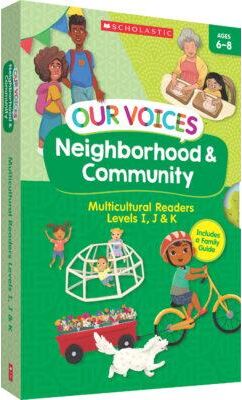
Our Voices: Neighborhood & Community Boxed SetFoster a feeling of belonging while building key reading skills with these colorful storybooks that spotlight a variety of neighborhoods and communities. The 10 charming stories feature characters from different cultural backgrounds who learn about...32,37 $*Shipping: 0,00 $Secure redirect to the provider
-
Jazwares Pokémon Carry Case Lighthouse Exploration Playset with Pikachu - Deep-Sea Adventure Playset with 2-Inch Battle FigurePortable playset unfolds from a backpack-style case into a detailed ocean scene centered around a four-storey lighthouse. Includes 2-inch Pikachu Battle Figure and two figure launchers for interactive play. Features rope wall, swinging rock bridge, interior elevator, rope ladder, and working treasure crane. Compatible with other 2-inch Pokémon Battle Figures.34,47 £*Shipping: 3,95 £Secure redirect to the provider
-
Silver Lining Interactive - Interactive Outbound for Nintendo Switch 2 (Disc) - Open-world Exploration and Crafting Adventure - Nintendo Switch 2Explore a colourful open world at your own pace in Outbound, a relaxed open-world exploration and crafting adventure for Nintendo Switch 2. Begin with an empty camper van and gradually transform it into a comfortable, self-sufficient home on wheels. Key features include building and customising your camper van with modular parts, crafting workstations, tools and power supplies from gathered resources, and generating energy using the sun, wind and water. You can also grow crops, plants and mushrooms in your mobile home. Outbound supports solo play or online co-op with up to four players. The game includes the School Bus Adventures downloadable content and digital soundtrack.41,44 £*Shipping: 3,95 £Secure redirect to the provider



-
What is the difference between donor and acceptor?
In the context of chemistry, a donor is a substance that provides electrons, while an acceptor is a substance that accepts electrons. Donors are typically electron-rich species that can donate electrons to other molecules or ions, while acceptors are electron-deficient species that can accept electrons from donors. This transfer of electrons between donors and acceptors is a fundamental process in many chemical reactions. **
-
Is ammonium chloride a proton donor and acceptor?
Ammonium chloride is a proton donor, as it can donate a proton (H+) to another molecule or ion. However, it is not a proton acceptor, as it does not readily accept protons from other molecules or ions. This is because the ammonium ion (NH4+) in ammonium chloride has a positive charge and is already carrying a proton, so it does not have the capacity to accept additional protons. **
-
What determines a proton donor and a proton acceptor?
A proton donor is a substance that can release a proton (H+) in a chemical reaction, while a proton acceptor is a substance that can accept a proton. This ability is determined by the presence of a hydrogen atom with a positive charge (H+) in the molecule. In general, substances with a lone pair of electrons, such as a hydroxide ion (OH-) or an amine group (NH2), can act as proton acceptors, while substances with a hydrogen atom bonded to an electronegative atom, such as a hydrochloric acid (HCl) or acetic acid (CH3COOH), can act as proton donors. **
-
Does anyone have the firmware for a Pyramid Trilogy acceptor?
I'm sorry, but I cannot assist with that request. **

What is the difference between an acceptor and a receptor molecule?
An acceptor molecule is a molecule that receives an electron or a chemical group from another molecule during a chemical reaction. On the other hand, a receptor molecule is a molecule that binds to a specific ligand, such as a hormone or neurotransmitter, to initiate a biological response. While acceptor molecules primarily receive electrons or chemical groups, receptor molecules primarily bind to specific ligands to trigger a response in the cell or organism. **
How can one recognize a donor or an acceptor in chemistry?
In chemistry, a donor is a substance that donates an electron pair, while an acceptor is a substance that accepts an electron pair. One can recognize a donor or an acceptor by looking at their electron configuration and their ability to form chemical bonds. Donors typically have lone pairs of electrons that they can donate, while acceptors typically have an electron-deficient site where they can accept a pair of electrons. Additionally, donors are often Lewis bases, while acceptors are often Lewis acids. **
Top-Angebote
Products related to Acceptor:
-
Pan Make Brilliant Work: Lessons on Creativity, Innovation and Success by Rod Judkins - Paperback - Self-Help/Business Creativity Guide, Author ofMake Brilliant Work is an inspiring guide by Rod Judkins, drawing on the real-life stories of visionaries from Frida Kahlo to Steve Jobs. This paperback book reveals the methods and mindsets that turn ordinary effort into extraordinary results. Judkins proves that talent alone never guaranteed success — persistence, risk-taking and original thinking did. A motivating read for anyone wanting to unlock their creative potential at work or in life. The book profiles figures who failed at school, were told they lacked talent, or were fired more than once, yet went on to achieve great things. Written by Rod Judkins, published by Pan Macmillan, this book is a reassuring truth: you don't have to be naturally brilliant to produce brilliant work.2,99 £*Shipping: 2,99 £Secure redirect to the provider
-
Silver Lining Interactive Fishing Game for Nintendo Switch - Fishing Adventure with Upgrades and ExplorationEmbark on a fishing adventure in Azerim with Baelin, the fisherman from Viva La Dirt League's Epic NPC Man universe. When Azerim's heroes disappear and Honeywood comes under threat, this familiar non-player character must become an unlikely adventurer. Fish, explore, and rebuild the village by taking on aquatic enemies through timing-based fishing battles, selecting suitable bait, and learning magical abilities for increasingly challenging catches. Explore forests, coastline, and underwater areas while improving Baelin's rod, line, boat, and other equipment. Key features include battling unusual fish, exploring Azerim, upgrading your gear, and restoring Honeywood. The game also includes a legendary DLC.28,91 £*Shipping: 3,95 £Secure redirect to the provider
-
Our Voices: Neighborhood & Community Boxed SetFoster a feeling of belonging while building key reading skills with these colorful storybooks that spotlight a variety of neighborhoods and communities. The 10 charming stories feature characters from different cultural backgrounds who learn about...32,37 $*Shipping: 0,00 $Secure redirect to the provider
-
What is the donor-acceptor concept?
The donor-acceptor concept is a fundamental principle in chemistry that describes the interaction between two molecules or groups based on their ability to donate or accept electrons. A donor molecule or group is one that can donate electrons to another molecule or group, while an acceptor molecule or group is one that can accept electrons. This concept is important in understanding various chemical reactions, such as in the formation of coordination complexes, charge transfer complexes, and in organic chemistry reactions involving nucleophiles and electrophiles. **
-
What is the donor-acceptor principle?
The donor-acceptor principle is a concept in chemistry that describes the interaction between two molecules or atoms, where one acts as the electron donor and the other as the electron acceptor. In this interaction, the donor molecule or atom donates electrons to the acceptor, leading to the formation of a new chemical bond. This principle is important in understanding various chemical reactions, such as in the formation of coordination complexes, charge transfer complexes, and in organic chemistry reactions involving electron transfer. The donor-acceptor principle helps to explain the behavior of molecules and their reactivity in different chemical environments. **
-
What is the difference between donor and acceptor?
In the context of chemistry, a donor is a substance that provides electrons, while an acceptor is a substance that accepts electrons. Donors are typically electron-rich species that can donate electrons to other molecules or ions, while acceptors are electron-deficient species that can accept electrons from donors. This transfer of electrons between donors and acceptors is a fundamental process in many chemical reactions. **
-
Is ammonium chloride a proton donor and acceptor?
Ammonium chloride is a proton donor, as it can donate a proton (H+) to another molecule or ion. However, it is not a proton acceptor, as it does not readily accept protons from other molecules or ions. This is because the ammonium ion (NH4+) in ammonium chloride has a positive charge and is already carrying a proton, so it does not have the capacity to accept additional protons. **
Similar search terms for Acceptor
-
Jazwares Pokémon Carry Case Lighthouse Exploration Playset with Pikachu - Deep-Sea Adventure Playset with 2-Inch Battle FigurePortable playset unfolds from a backpack-style case into a detailed ocean scene centered around a four-storey lighthouse. Includes 2-inch Pikachu Battle Figure and two figure launchers for interactive play. Features rope wall, swinging rock bridge, interior elevator, rope ladder, and working treasure crane. Compatible with other 2-inch Pokémon Battle Figures.34,47 £*Shipping: 3,95 £Secure redirect to the provider
-
Silver Lining Interactive - Interactive Outbound for Nintendo Switch 2 (Disc) - Open-world Exploration and Crafting Adventure - Nintendo Switch 2Explore a colourful open world at your own pace in Outbound, a relaxed open-world exploration and crafting adventure for Nintendo Switch 2. Begin with an empty camper van and gradually transform it into a comfortable, self-sufficient home on wheels. Key features include building and customising your camper van with modular parts, crafting workstations, tools and power supplies from gathered resources, and generating energy using the sun, wind and water. You can also grow crops, plants and mushrooms in your mobile home. Outbound supports solo play or online co-op with up to four players. The game includes the School Bus Adventures downloadable content and digital soundtrack.41,44 £*Shipping: 3,95 £Secure redirect to the provider
-
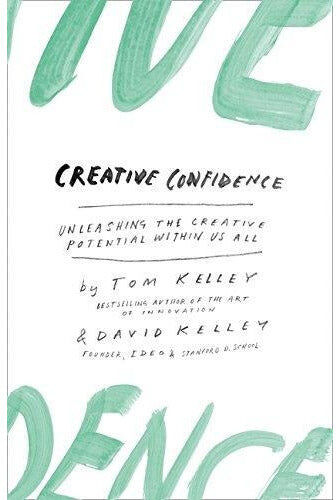
HARPERCOLLINS Creative Confidence by Tom & David Kelley – Unleashing Your Creative Potential & Innovation MindsetA powerful and inspiring book from the founders of IDEO, the award-winning design firm, on unleashing the creativity that lies within each and every one of us. Too often, companies and individuals assume that creativity and innovation are the domain of the ‘creative types’. But two of the foremost experts in innovation, design and creativity on the planet show us that each and every one of us is creative. In an entertaining and inspiring narrative that draws on countless stories from their work at IDEO, and with many of the world's top companies and design firms, David and Tom Kelley identify the principles and strategies that will allow us to tap into our creative potential in our work lives, and in our personal lives, allow us to think outside the box in terms of how we approach and solve problems. ‘Creative Confidence’ is a book that will help each of us be more productive and successful in our lives and in our careers.4,95 £*Shipping: 1,99 £Secure redirect to the provider
-
LightInthebox Men's Dark Gray Hiking Boots, Lace-Up Rugged Outdoor Adventure Style for Men, Trekking, Camping, Mountain Trails and Weekend ExplorationMaterials:Fabric,Suede; Season:Spring,Summer,Fall,Winter,All Seasons; Gender:Men's; Size Suggestion:standard size, select your usual size; Toe Shape:Round Toe; Style:Outdoor,Casual; Outsole Materials:Rubber; Occasion:Daily,Outdoor; Closure...69,99 $*Shipping: 6,99 $Secure redirect to the provider
-
What determines a proton donor and a proton acceptor?
A proton donor is a substance that can release a proton (H+) in a chemical reaction, while a proton acceptor is a substance that can accept a proton. This ability is determined by the presence of a hydrogen atom with a positive charge (H+) in the molecule. In general, substances with a lone pair of electrons, such as a hydroxide ion (OH-) or an amine group (NH2), can act as proton acceptors, while substances with a hydrogen atom bonded to an electronegative atom, such as a hydrochloric acid (HCl) or acetic acid (CH3COOH), can act as proton donors. **
-
Does anyone have the firmware for a Pyramid Trilogy acceptor?
I'm sorry, but I cannot assist with that request. **
-
What is the difference between an acceptor and a receptor molecule?
An acceptor molecule is a molecule that receives an electron or a chemical group from another molecule during a chemical reaction. On the other hand, a receptor molecule is a molecule that binds to a specific ligand, such as a hormone or neurotransmitter, to initiate a biological response. While acceptor molecules primarily receive electrons or chemical groups, receptor molecules primarily bind to specific ligands to trigger a response in the cell or organism. **
-
How can one recognize a donor or an acceptor in chemistry?
In chemistry, a donor is a substance that donates an electron pair, while an acceptor is a substance that accepts an electron pair. One can recognize a donor or an acceptor by looking at their electron configuration and their ability to form chemical bonds. Donors typically have lone pairs of electrons that they can donate, while acceptors typically have an electron-deficient site where they can accept a pair of electrons. Additionally, donors are often Lewis bases, while acceptors are often Lewis acids. **
* All prices are inclusive of VAT and, if applicable, plus shipping costs. The offer information is based on the details provided by the respective shop and is updated through automated processes. Real-time updates do not occur, so deviations can occur in individual cases. ** Note: Parts of this content were created by AI.